

The question of how long does a fractional cfo engagement last is one of the first decisions founders and CEOs face when buying outsourced financial leadership. Typical durations range from a focused 4–12 week project to multi-year retained relationships; the right length depends on the objective (fundraising readiness, cash flow stabilization, interim leadership, growth planning), the engagement model (project, retainer, equity blend), and the company’s starting maturity in financial forecasting, cash flow management, and operational data quality.
Below is a comprehensive, practical guide that treats each timing scenario as a standalone use-case. It ties techniques to business results—improved runway visibility, cleaner investor reporting, faster fundraising, and a finance function that scales. Expect actionable deliverables, sample timelines, KPIs, pricing logic, handover checklists, and pitfalls to avoid. Use this to set expectations with potential fractional CFO partners and to craft scopes of work that produce measurable outcomes.
Transitioning into specifics about duration and drivers will help shape realistic plans and contracts.
Typical engagement durations and the operational drivers that determine them
Short-term engagements: focused outcomes in 4–12 weeks
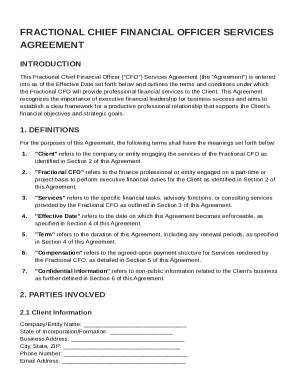
Short engagements aim at a single, urgent outcome: prepare financials for an investor update, complete a focused due diligence package, or produce a clean short-term cash forecast. These are often scoped as fixed-fee projects with discrete deliverables and a clear end date.
- Common deliverables: 3-way financial modeling (cash, P&L, balance sheet) to support a term sheet; a consolidated cap table and investor reporting pack; a 90-day cash forecast with scenario sensitivity.
- Hours and intensity: typically full-time concentrated effort for a 2–4 week window or part-time spread across 6–12 weeks (equivalent to 2–4 days/week).
- When it’s right: emergency fixes, pre-meeting prep, or a targeted milestone like a board pack or M&A teaser.
Medium-term engagements: 3–9 months to build capability and stabilize metrics
Medium-term engagements deliver both immediate fixes and lasting processes. Expect outcomes such as improved cash flow management, repeatable monthly reporting, and an initial FP&A framework that supports strategic decisions.
- Common deliverables: monthly board reporting cycle establishment, rolling 12-month financial forecasting, burn-rate and runway analysis, revised KPIs and dashboards, and a recruitment brief for a permanent finance hire.
- Hours and intensity: often a retained engagement of 0.3–0.6 FTE (10–30 hours/week) with predictable weekly cadence for leadership calls and hands-on support for month-end.
- When it’s right: companies preparing for Series A/B, stabilizing after a funding round, or needing to clean up finance ops after rapid growth.
Long-term engagements: 9–36 months for strategy and team building
Long engagements mirror the role of a permanent CFO: capital allocation strategy, investor relations, strategic planning, and finance team development. These are structured as retainers with an evolving scope.
- Common deliverables: multi-year financial plan, capital strategy and fundraising execution support, building an FP&A function, governance and compliance frameworks, and participation in executive leadership on strategy.
- Hours and intensity: 0.5–1.0 FTE equivalents depending on stage and complexity, with predictable monthly fees and a cadence including board prep and strategic reviews.
- When it’s right: scaling companies that need ongoing strategic finance leadership but aren’t ready (or don’t want) to hire a full-time CFO.
Ongoing retained engagements (indefinite): outsourced financial leadership as part of the operating model
Some companies choose fractional CFOs as a long-term operating model. These arrangements are straightforward retainers with regular strategic and operational responsibilities.
- Typical structure: fixed monthly fee for defined hours, with quarterly scope reviews and a mechanism to add project work at a short-term rate.
- Pros: continuity, predictable cost vs. a full-time hire, institutional knowledge retained, and flexible scaling of effort as company needs evolve.

- Cons: may require explicit governance to prevent scope creep and ensure accountability for internal hiring decisions and operational changes.
Transitioning from duration types into the engagement models helps match compensation to outcomes and signals the expected commitment.
Engagement models and pricing that determine how long the relationship must last
Retainer model: predictable fees for ongoing time blocks
The most common approach for fractional CFOs is a monthly retainer. It aligns incentives for ongoing advisory and operational support, and usually includes a defined number of hours or days per month.
- Structures: X days/month (e.g., 2–10 days), or Y hours/month, often with a minimum 3–6 month commitment to allow measurable progress.
- Financial signals: retainer pricing often reflects the fractional CFO’s seniority, market, and complexity; expect ranges from a few thousand to tens of thousands per month.
- Duration implications: retainers naturally extend until an agreed exit criterion—fundraising closed, permanent hire made, or strategy implemented—so these engagements tend to be medium- to long-term.
Project-based model: fixed scope, fixed timeline
When outcomes are specific and measurable, project pricing is appropriate. These engagements have explicit deliverables and often include acceptance criteria.
- Common use-cases: building a fundraising data room, implementing a new financial modeling infrastructure, or executing a sale readiness package for M&A.
- Duration: typically 4–12 weeks for focused projects; larger transformation projects may be broken into several phases over months.
- Risk allocation: projects reduce uncertainty for buyers but require precise scoping to avoid disputes over completion and value.
Hourly or day-rate model: flexible and reactive
Ideal for ad-hoc advice or when the company prefers minimal commitment. Retainers often convert to day-rate work for overflow or out-of-scope items.
- Use-care: best for early-stage companies with unpredictable needs or to bridge a brief leadership gap.
- Duration: variable; can be the shortest engagement but also more expensive over time if needs are ongoing.
Equity/success fee blends: aligning incentives with outcomes
Some fractional CFOs accept a lower retainer in exchange for equity or a success fee tied to outcomes (capital raised, deal closed, cost reductions). This changes the effective duration and alignment.
- Advantages: aligns incentives with strategic milestones like fundraising success or a successful sale.
- Negotiation: requires clear definitions of milestones, valuation mechanics, vesting schedules, and post-close obligations.
Blended models: retainers plus milestone fees
Common for fundraising and M&A advisory: a modest retainer covers ongoing advisory, and a higher milestone fee is paid on deal close. This creates a practical timeline around fundraising cycles or M&A windows.
Understanding models clarifies what "duration" means in practice. Next, explore the concrete business situations that drive those timelines.
Business situations that define engagement length and outcomes
Preparing for fundraising (seed through Series B)
Fundraising preparation is one of the most common reasons to hire a fractional CFO. The engagement length varies by stage and starting condition.
- Seed/pre-seed: 1–4 months. Focus on clean financials, a simple 12–18 month cash model, and an investor pitch pack. Often a short retainer or project.
- Series A: 3–9 months. Requires audited/clean GAAP statements, a robust 24–36 month plan, unit economics validation, and investor diligence readiness. Expect a medium-term retainer leading up to and through the round.
- Series B+: 6–18 months. Deeper analytics on unit economics, scalable FP&A, and stronger governance. May require continuous engagement until scaling milestones are met.
Cash-crisis and turnaround work
When cash is running out, time is the limiting factor. Short, intensive engagements produce immediate runway extension and transactional stability; medium engagement ensures operational fixes adhere.
- Immediate goals (1–4 weeks): triage the burn, negotiate vendor terms, secure bridge financing, and produce a focused 90-day cash forecast.
- Stabilization goals (1–3 months): operational cost rationalization, revenue acceleration plans, and revised pricing or collections processes.
- Longer-term fixes (3–9 months): process improvements—billing, collections, procurement—plus governance changes to prevent recurrence.
Interim CFO replacement after a departure
Interim fractional CFOs bridge the gap when a CFO leaves. The engagement typically lasts until a permanent hire is onboarded and ramped—commonly 3–9 months.
- Priority deliverables: continuity of board reporting, maintaining investor relationships, and completing any in-flight financings or audits.
- Handover: ensure the next CFO inherits documentation, dashboards, and a prioritized roadmap.
Scaling operations and building a finance organization
When scaling revenue and headcount, the fractional CFO’s role is to design and sometimes recruit the permanent finance team. This is a medium- to long-term project (6–24 months).
- Common tasks: define the FP&A structure, hire and mentor controller/analyst roles, set up process flows and ERP/finance systems.
- Outcome: a finance organization capable of handling monthly close, operational reporting, and strategic planning without day-to-day fractional intervention.
M&A advisory and sale readiness
M&A engagements often have episodic intensity tied to deal timelines. Preparation can be 3–9 months; diligence and transaction execution typically add another 2–6 months.
- Pre-deal readiness: clean financial statements, validated unit economics, and an accessible due-diligence data room.
- During deal: preparing management packs, participating in buyer meetings, and supporting negotiations and closing logistics.
After identifying the situation and likely duration, set a detailed plan of deliverables and KPIs to measure progress.
Deliverables, milestones, and KPIs tied to timelines
30/60/90-day plan for short and medium engagements
Define a concrete 30/60/90 plan to ensure alignment and quick wins.
- First 30 days: stabilize immediate issues—clean books, reconcile bank and AR/AP, produce a 13-week cash forecast, and deliver an initial board pack.
- First 60 days: implement monthly reporting templates, build a rolling forecast (12–18 months), and introduce key dashboards (cash, burn, gross margin, CAC payback).
- First 90 days: finalize investor materials or due diligence pack, implement one process improvement (e.g., collections cadence), and set hiring priorities for finance roles.
6–12 month roadmap for capability building
For strategic engagements, a 6–12 month roadmap converts advisory into operational results.
- Quarter 1: reporting cadence and baseline forecast; cost and revenue levers identified.
- Quarter 2: systems and automation improvements (ERP, bookkeeping cleanup, dashboards), establishing governance (approval matrices).
- Quarter 3–4: hire and onboard key finance roles, implement strategic metrics (unit economics, LTV/CAC), and execute capital strategy.
Key performance indicators to measure the engagement
Use KPIs that connect finance work to business outcomes. Track progress against these to justify continued engagement.
- Runway and weeks of cash on hand (immediate stability).
- Monthly burn rate and trend (cost control).
- Forecast accuracy (variance vs. actuals) and rolling forecast adherence.
- Time-to-close month-end (close efficiency).
- Investor reporting timeliness and quality (board pack acceptance).
- Operational KPIs: gross margin, contribution margin, CAC payback, churn for SaaS, and AR days outstanding for revenue-heavy businesses.
Reporting cadence and role clarity
Define who receives what, when, and in what format. Typical cadence includes:
- Weekly: cash position and near-term actions for execs.
- Monthly: full board pack, P&L vs. forecast, KPIs, and a rolling forecast update.
- Quarterly: strategic reviews, capital plans, and scenario modeling for fundraising or M&A.
With deliverables and KPIs in place, next design a pragmatic exit strategy and knowledge transfer plan so the company retains value when engagement ends.
Structuring exit criteria and knowledge transfer when ending an engagement
Defining clear exit criteria
Set measurable criteria in the contract to determine completion or transition milestones. Typical exit triggers:
- Successful close of a financing round with agreed terms.
- Permanent CFO hired and onboarded to agreed competency levels.
- Specific KPIs met (e.g., 50% improvement in forecast accuracy, 90-day cash runway extended to 12 months).
- Implementation of a specified set of processes (monthly close, AR/AP SOPs, reporting dashboards).
Documentation and playbooks to transfer knowledge
Ensure the fractional CFO leaves a complete operations manual and toolbox:
- Month-end close checklist and ownership matrix.
- Detailed financial model with assumptions, drivers, and scenario tabs.
- Board pack templates and source-data mappings.
- Vendor contracts, lender documents, and capitalization schedule.
Training, mentoring, and handover activities
Active handover accelerates sustainable capability:
- Shadowing: internal hires or promoted controllers shadow the fractional CFO for 4–8 weeks.
- Co-lead: gradually shift responsibility for monthly close and board reporting.
- Recruiting support: involvement in interviews and role definitions to ensure hires match the established framework.
Post-engagement support options
Offer a short post-handover advisory window (e.g., 30–90 days) at a reduced retainer to handle follow-ups. This reduces risk and protects knowledge transfer.
Before contracting, understand the common pitfalls that can extend engagements unnecessarily and how to avoid them.
Risks, common pitfalls, and how to mitigate them
Scope creep and ambiguous objectives
Pitfall: engagements kept alive by ill-defined tasks. Mitigation: use a Statement of Work with specific deliverables, acceptance criteria, and a change-order process.
Misaligned incentives between founder and fractional CFO
Pitfall: advisor focuses on billable hours, founder wants results. Mitigation: align on outcomes, include success milestones, or tie a component of compensation to results (carefully drafted success fees or equity vesting tied to milestones).
Data quality and system immaturity
Pitfall: poor bookkeeping or fragmented systems lengthen timelines. Mitigation: budget a data remediation phase (bookkeeping cleanup, reconciliations) into the first 30–60 days; treat it as a non-negotiable prerequisite.
Board and investor expectations
Pitfall: board expects full-time presence or different reporting. Mitigation: set stakeholder expectations early; present a communication plan and agreed reporting cadence to the board.
Lack of internal buy-in and cultural friction
Pitfall: internal teams resist changes initiated by an external CFO. venture growth partners cfo kpis : include functional leaders in planning, emphasize training, and set short-term wins to build credibility.
Next, examine cost/benefit scenarios with numbers to make the decision tangible.
Cost/benefit examples and ROI: what duration buys you
Scenario: seed-stage fundraising readiness
Baseline: startup with $300k runway, chaotic books, and a pitch deadline in 8 weeks.
- Recommended engagement: 8-week project + 3-month retainer through fundraising close. Deliverables: cleaned financials, a 18-month rolling forecast, investor-ready data room, and board pack.
- Cost estimate: $20k–$35k for the project, plus $6k–$12k/month retainer. Total ~ $40k–$70k.
- Benefit: improved probability of closing a seed at favorable terms; runway extended via negotiated vendor terms and bridge financing; value of avoided a failed raise or bad valuation can far exceed engagement cost.
Scenario: cash-crisis turnaround
Baseline: $90k runway, unexpected churn, need to avoid shutdown within 6 weeks.
- Recommended engagement: intensive 4-week turnaround (full-time fractional CFO or equivalent) followed by a 3-month stabilization retainer.
- Cost estimate: $15k–$30k for the intensive phase, then $8k–$15k/month for stabilization. Total ~ $40k–$75k.
- Benefit: extended runway through negotiating payables, improving collections, and securing a short-term bridge; even a modest extension can create time to close financing, making the ROI high.
Scenario: scaling to Series B and building finance team
Baseline: growing revenue, need to mature FP&A and hire a controller and head of FP&A.
- Recommended engagement: 12–24 month retainer (0.5–1.0 FTE) focused on systems, recruitment, and governance.
- Cost estimate: $12k–$40k/month depending on fractional CFO seniority and hours. Total over 12 months: $144k–$480k.
- Benefit: stronger unit economics, improved capital allocation decisions, better valuation at next round. Hiring mistakes avoided and smoother fundraising execution typically offset the cost.
These examples show how engagement length connects to business impact. Finalize this plan with a clear contracting approach and the next steps below.
Concise summary and actionable next steps
Summary
Engagements vary: short projects (4–12 weeks) for immediate deliverables; medium retainers (3–9 months) for stabilization and fundraising; long-term retainers (9–36 months) for strategic finance leadership and team building. The right duration is determined by the objective, data maturity, model of engagement (retainer vs. project), and the company’s appetite for permanent hires versus outsourced leadership. Tie scope and compensation to measurable outcomes (runway extension, forecast accuracy, successful fundraise, or completed hires) and require clear exit criteria and knowledge-transfer commitments.
Actionable next steps
- Define the primary objective: fundraising, turnaround, interim leadership, or scaling finance—choose the shortest timeline that reliably delivers that outcome.
- Audit current finance maturity: assess bookkeeping accuracy, systems, and current KPIs; add a 2–4 week remediation period if necessary.
- Select an engagement model: retainer for ongoing needs, project for discrete outcomes, or a blended model for fundraising/M&A.
- Insist on a 30/60/90 plan with clear deliverables and acceptance criteria, plus measurable KPIs (runway, burn, forecast variance, month-end close time).
- Include exit criteria and a knowledge-transfer plan: documentation, playbooks, and a “co-lead” handover window for internal hires.
- Budget for realistic costs and evaluate ROI based on runway saved, valuation uplift, and internal productivity gains.
Use this framework to set expectations in your Statement of Work, negotiate terms, and ensure that the fractional CFO engagement ends with durable improvements to forecasting, board reporting, capital allocation, and the operational finance function.